For years, independent artists have been told that streaming platforms would democratize music.
The promise seemed simple: anyone could upload music, reach a global audience, and build a career without the backing of a major record label.
In many ways, that promise came true.
Independent musicians now have more access to listeners than ever before. Songs can travel across continents overnight, artists can build loyal communities online, and careers can emerge from bedrooms instead of boardrooms.
Yet one major question remains unresolved:
Can independent artists actually make a sustainable living from their music?
As debates around streaming revenue, AI-generated content, and artist ownership continue to grow, a new push for musician rights is gaining momentum worldwide. For many creators, the conversation is no longer about visibility; it is about value.
The Streaming Success Paradox
Streaming has transformed the music industry.
Millions of songs are now available instantly, giving listeners unprecedented access to music from around the world.
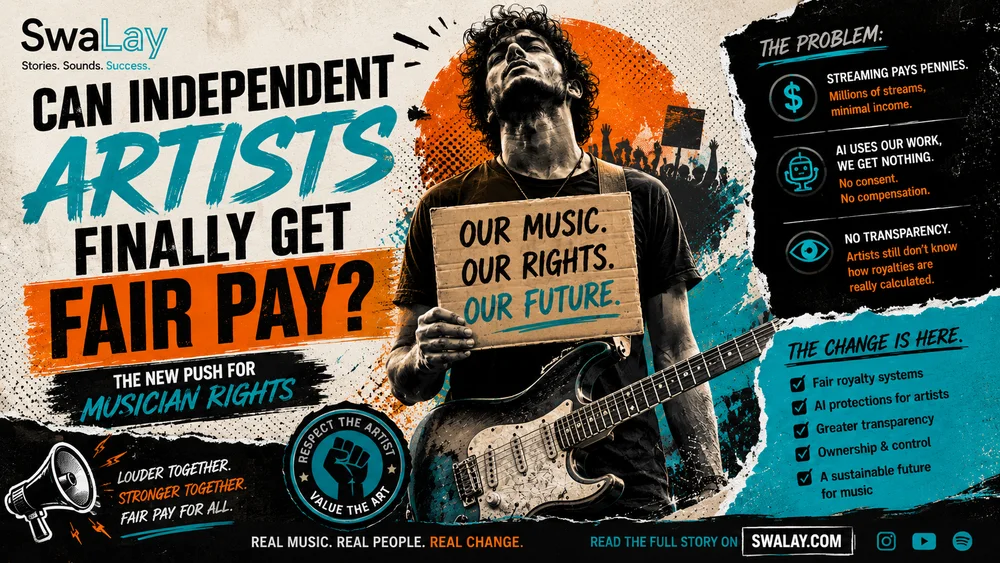
But for many independent artists, success on streaming platforms does not always translate into financial stability.
While artists may accumulate thousands—or even millions—of streams, the revenue generated often falls short of supporting a full-time career.
As a result, many musicians rely on a combination of live performances, merchandise, brand partnerships, teaching, and fan support to sustain their work.
The challenge is not reaching audiences.
The challenge is being compensated fairly for that reach.
Why Musician Rights Are Back in the Spotlight
Recent discussions within the global music industry have focused on strengthening protections for artists.
Advocates argue that musicians deserve greater transparency regarding how streaming royalties are calculated and distributed.
At the same time, concerns surrounding artificial intelligence have added another layer to the conversation.
As AI tools become capable of generating music, imitating voices, and training on existing creative works, artists are asking critical questions:
Who owns creative output?
How should artists be compensated when their work contributes to AI systems?
And what safeguards should exist to protect original creators?
These questions are no longer theoretical.
They are becoming central to the future of the music business.
The Rise of Artist Ownership
One of the most significant shifts in modern music is the growing emphasis on ownership.
Independent artists today are increasingly focused on retaining rights to their music, controlling distribution, and building direct relationships with audiences.
Ownership offers more than financial benefits.
It provides creative freedom.
Artists can choose how their music is released, licensed, marketed, and monetised without sacrificing their identity or vision.
As technology evolves, many musicians are realising that long-term sustainability depends not only on exposure but also on control.
The future may belong to artists who own both their art and their relationships with their audience.
Beyond Streaming Numbers
The industry is slowly recognising that success cannot be measured solely through streams.
Community engagement, fan loyalty, live experiences, and direct support models are becoming increasingly important.
Many independent artists are finding success through:
Exclusive fan communities
Direct-to-fan platforms
Crowdfunding initiatives
Subscription-based content
Merchandise and live events
Creative collaborations
These approaches allow artists to diversify income while reducing dependence on a single platform.
In many cases, a smaller but highly engaged audience can be more valuable than millions of passive listeners.
Why This Matters for the Future of Music
The push for musician rights is about more than compensation.
It is about ensuring that creativity remains sustainable.
If artists cannot earn fair value from their work, the industry risks discouraging the very people who create the music audiences love.
Independent artists have become some of the most innovative voices in modern music.
They drive experimentation, shape cultural trends, and build communities around authentic storytelling.
Protecting their rights is not simply an artist issue.
It is an industry issue.
And increasingly, it is a listener issue as well.
The SwaLay Perspective
At SwaLay, we believe the future of music should empower creators, not just platforms.
Independent artists are building audiences, shaping culture, and redefining what success looks like in the modern music landscape.
As conversations around fair pay, ownership, transparency, and AI continue to evolve, one principle remains clear:
Artists deserve to be valued not only for their creativity but also for the economic contributions they make to the industry.
The push for musician rights is not about resisting innovation.
It is about ensuring innovation works for creators as much as it works for consumers.
And for independent artists around the world, that future cannot arrive soon enough.