A song goes viral.
Millions of views appear within days.
Social media feeds are flooded with the same sound. Creators use it in videos. Brands jump on the trend. Streaming numbers explode.
For a moment, it feels like the artist has made it.
But six months later, many listeners struggle to remember the artist's name.
This is the paradox of modern music.
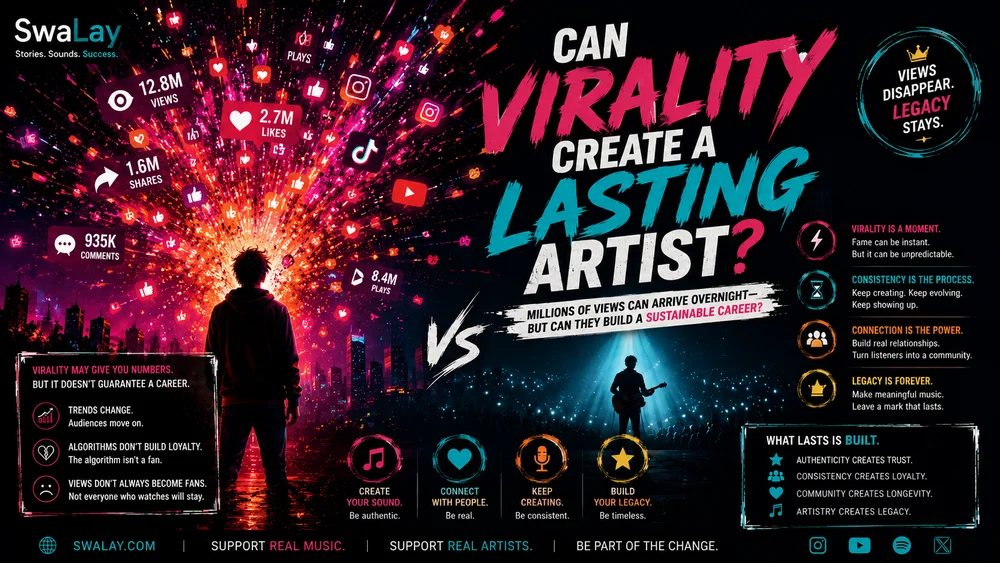
Virality can make a song famous overnight.
Building a lasting career is something entirely different.
As platforms like TikTok, Instagram Reels, and YouTube Shorts continue to shape music discovery, artists are facing an important question:
Is going viral enough?
The New Gateway to Success
There was a time when radio stations, record labels, and television networks controlled music discovery.
Today, algorithms often play that role.
A fifteen-second clip can introduce an artist to millions of people around the world. A single trend can generate more exposure than years of traditional promotion.
For independent artists, this shift has created opportunities that were unimaginable just a decade ago.
Talent no longer needs permission to be discovered.
The internet has become the new stage.
When Views Become the Goal
While virality creates visibility, it can also create pressure.
Artists often find themselves chasing trends, creating content around algorithms, and optimizing music for social platforms.
The challenge is that algorithms reward attention—not necessarily artistic growth.
A song designed for a viral moment may generate millions of views.
But views do not automatically create loyal listeners.
And listeners do not automatically become fans.
This is where many careers begin to diverge.
Viral Songs vs Lasting Artists
History shows that memorable artists rarely survive because of one successful song.
They survive because they build identity.
Listeners return to artists who tell stories, create emotional connections, and offer something distinctive.
Virality can introduce an artist.
Consistency builds trust.
Community creates longevity.
The artists who sustain success are often those who transform casual listeners into dedicated supporters.
In other words, attention may open the door, but connection keeps it open.
The Independent Artist Advantage
Interestingly, independent artists may be better positioned for long-term success than many people realize.
Without the pressure of major industry expectations, they often focus on audience relationships rather than short-term trends.
Many independent musicians are building careers through:
Live performances
Fan communities
Direct engagement
Exclusive content
Consistent storytelling
Authentic branding
These strategies may grow slower than viral moments, but they often create stronger foundations.
A thousand passionate fans can sometimes be more valuable than a million passive viewers.
What Audiences Are Really Looking For
Modern listeners have become incredibly skilled at recognizing authenticity.
In a digital environment filled with constant content, audiences increasingly value artists who feel genuine.
The artists who last are often those who remain recognizable beyond a single trend.
They create music that listeners return to months and years later.
Their success becomes less about algorithms and more about emotional relevance.
That kind of connection cannot be manufactured overnight.
The SwaLay Perspective
At SwaLay, we believe virality is a tool—not a destination.
Social media has opened remarkable opportunities for independent artists, helping new voices reach audiences faster than ever before.
But sustainable careers are built on something deeper than numbers.
They are built on trust.
On storytelling.
On artistic identity.
And on communities that continue showing up long after the trend has faded.
Virality can start a career.
Only authenticity can sustain one.
The future of music will not belong to the artists who are seen the most.
It will belong to the artists who are remembered.