
Every era of change has had its soundtrack. In India, protest songs have long been a powerful way for people to express hope, frustration, and demands for change. Today, as students, youth groups, and citizens increasingly use social media to raise their voices, protest music is making a remarkable comeback.
Unlike traditional political speeches, songs have the ability to unite people across languages, regions, and backgrounds. A powerful chorus or meaningful lyric can spread faster than a slogan, turning a local movement into a national conversation. Whether performed live during demonstrations or shared through Instagram Reels, YouTube Shorts, and streaming platforms, protest songs are finding new audiences in the digital age.
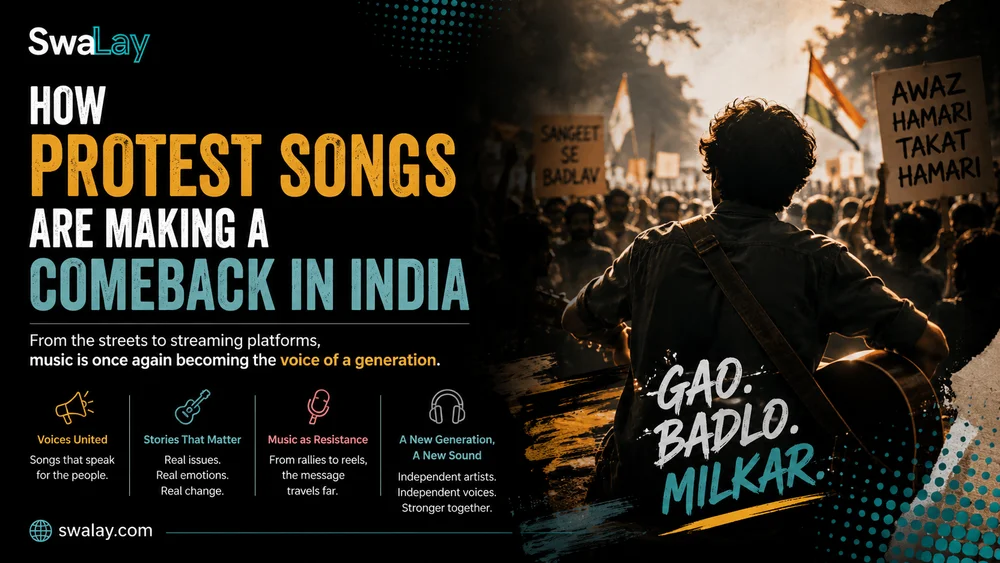
What makes today's movement different is the role of technology. Independent musicians no longer need major record labels or radio stations to reach listeners. A song recorded in a bedroom studio can go viral overnight if it resonates with public sentiment. This has opened the door for a new generation of artists who use music to reflect social realities while maintaining complete creative independence.
History has shown that music often becomes the emotional heartbeat of important moments. Songs do more than entertain. They inspire courage, preserve memories, and give people a shared identity during times of uncertainty. As conversations around education, employment, equality, and civic participation continue to grow, music once again serves as a bridge between emotion and action.
For the music industry, this revival also highlights the importance of authentic storytelling. Listeners are increasingly drawn to songs that carry meaning and connect with real experiences rather than simply following commercial trends.
At SwaLay, we believe music has always been more than entertainment. It is a powerful form of expression that reflects culture, captures moments in history, and gives creators the freedom to tell stories that matter. As independent artists continue to shape meaningful conversations through their work, protest music reminds us that sometimes the strongest message is delivered not through speeches, but through a song.