
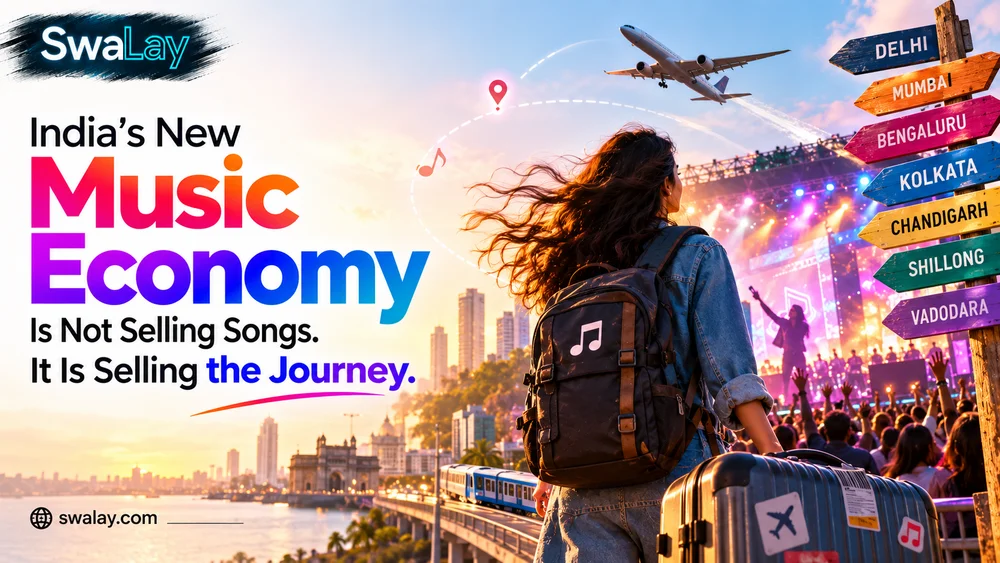
India’s growing concert culture is creating a new kind of consumer, one who does not simply buy a ticket in their own city. They book trains and flights, reserve hotels, plan weekends and travel hundreds of kilometres to experience an artist live.
A 2026 government framework estimates that nearly half a million fans now travel between cities for live music events. At the same time, premium ticketing options such as experience zones and curated access have reportedly grown by more than 100% year over year.
This changes the value of a concert.
A ticket is no longer the entire product. The trip around it becomes part of the experience.
The economic impact stretches far beyond the stage. Hotels, restaurants, transportation companies, local retailers and tourism businesses can all benefit when thousands of fans arrive for a single performance. EY’s analysis of the Diljit Dosanjh Dil-Luminati tour found that nearly half of attendees came from Tier-II and Tier-III cities, showing that music-driven travel is no longer restricted to India’s biggest metropolitan audiences. EY
Even more interestingly, smaller cities are beginning to enter the conversation. The government framework identifies cities including Chandigarh, Shillong and Vadodara as emerging cultural hubs, supported by touring artists and regional festivals.
For artists, this creates a new opportunity: a song can now move people physically, not just digitally.
That could eventually change how tours are planned, how cities compete for events and how brands participate in music.
The next big music metric may therefore not be streams or followers.
It could be much simpler:
How far will your fans travel to see you?
And that is a very different kind of music economy.