There was a time when television news channels were the primary source of breaking news. Viewers waited for scheduled bulletins, live debates, and newsroom updates to understand what was happening around them. Today, that landscape has changed dramatically. The rise of the creator economy has transformed how news is discovered, consumed, and shared.
From YouTube journalists and Instagram creators to independent reporters and content commentators, digital creators are delivering updates at unprecedented speed. Armed with smartphones, live streaming tools, and direct access to social media, they can report developments as they happen, often long before traditional television broadcasts begin.
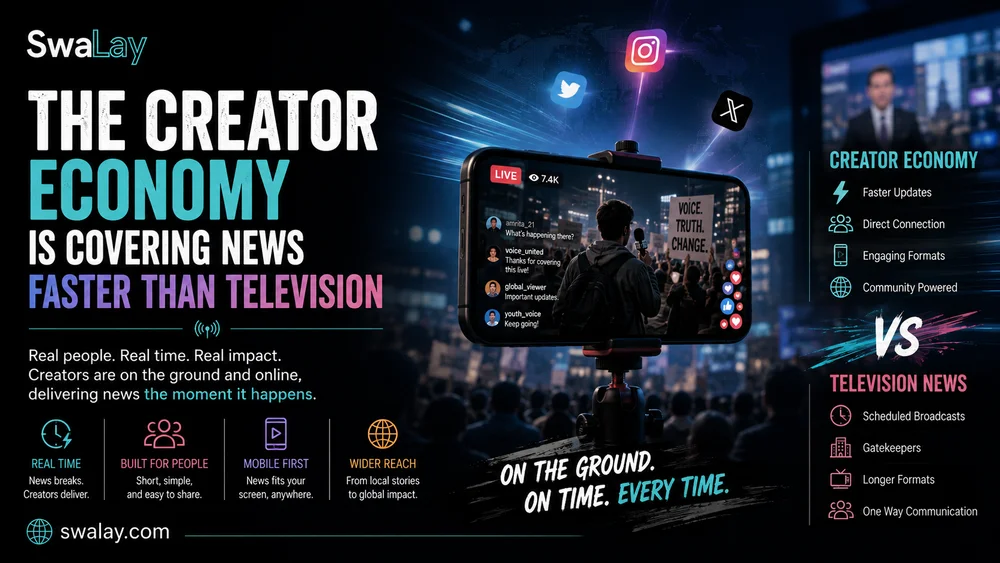
This shift is not simply about speed. It is also about accessibility. Creators explain complex events in shorter, more engaging formats that resonate with younger audiences. Whether through a sixty second video, a live stream, or a detailed YouTube analysis, they present information in ways that are easy to understand and instantly shareable.
Social media platforms have amplified this transformation. Every share, comment, and repost increases the reach of a story, allowing news to spread organically across communities. Instead of waiting for television anchors, audiences now rely on trusted creators who provide real time updates, context, and multiple perspectives.
Traditional media still plays an essential role in in depth reporting and fact checking. However, creators have become an important first point of contact for millions of people seeking immediate information. The result is a media ecosystem where digital creators and established news organizations increasingly coexist, each serving different audience needs.
This evolution also highlights the growing influence of independent creators. Building credibility, maintaining accuracy, and engaging directly with audiences have become just as valuable as access to a television studio.
At SwaLay, we believe the creator economy is reshaping every corner of digital media. Whether through music, storytelling, or news, creators are proving that authentic voices, supported by the right platforms and technology, can reach global audiences faster than ever before.
The future of news is no longer defined by who broadcasts first.
It is defined by who connects with people first.