
For years, touring success has been associated with packed arenas, major cities and nationwide schedules. But a quieter opportunity is emerging for independent musicians: the micro-tour, a short series of performances across a few nearby cities, designed around audience demand rather than prestige.
The timing matters. According to Ditto Music's Independent Music Report 2026, which surveyed 5,039 artists across 112 countries, 82% of respondents said they could not currently afford touring expenses. For emerging artists, the challenge is no longer simply finding a stage. It is making every performance financially worthwhile.
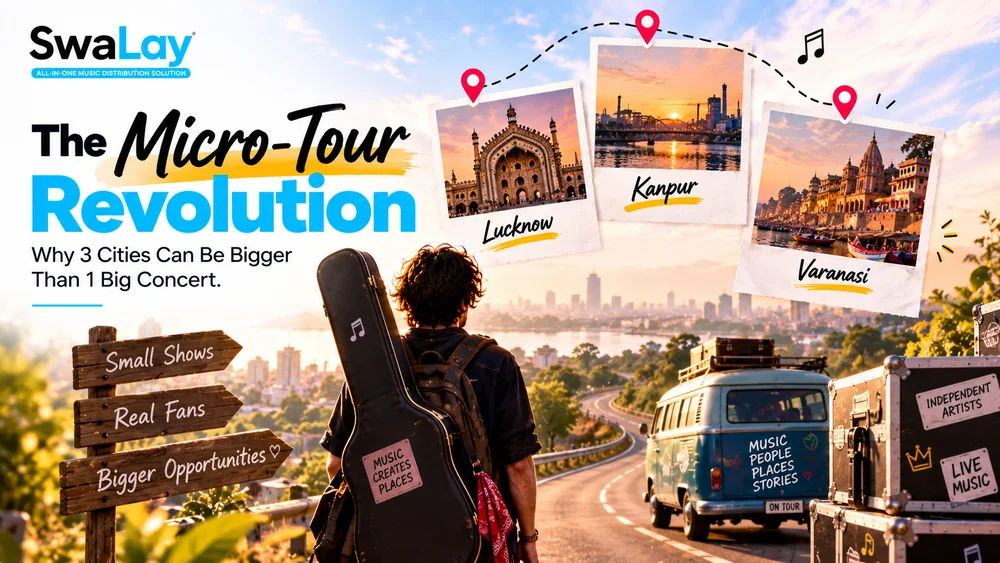
Why smaller tours could make a bigger difference
Imagine an independent artist with listeners in Lucknow, Kanpur and Varanasi. Instead of spending heavily on one large show in Mumbai, the artist could organise three intimate performances within a manageable travel circuit.
Fewer long-distance journeys can help control transport and accommodation costs. Smaller venues may also create closer audience connections, while local collaborations can introduce the artist to new listeners without relying entirely on expensive advertising.
This approach becomes particularly interesting as India's live-event industry expands geographically. A 2026 Ministry of Information and Broadcasting document identifies regional expansion, youth-focused formats and Tier 2 and Tier 3 markets as important growth drivers in the events sector.
The data artists should check before booking
A micro-tour should not be based on social media views alone. Artists and organisers can study where listeners are concentrated, which cities generate repeat engagement, whether fans are willing to pay for tickets and which local venues offer workable deals.
They can then test demand through advance registrations, small ticket releases or collaborations with colleges and local communities before committing to larger expenses.
A smarter route to sustainable growth
The real advantage of a micro-tour is not merely saving money. It is learning which audiences consistently show up, buy tickets and recommend an artist to others.
For independent musicians, three profitable shows may create a stronger foundation than one expensive concert with uncertain returns. For music distributors and artist-service companies such as SwaLay, this shift also highlights the value of helping artists understand their audience data and build careers beyond the release of a song.
The future of touring may not belong only to artists who can fill the biggest venues. It may also belong to those who know exactly where their listeners are, and how to reach them profitably.