For years, music distribution was treated as infrastructure.
An artist uploaded a song. A distributor delivered it to streaming platforms. The platforms handled discovery, streams and royalties.
That model is quietly changing.
In 2026, the distributor is becoming something much more important: the first line of trust in the digital music ecosystem.
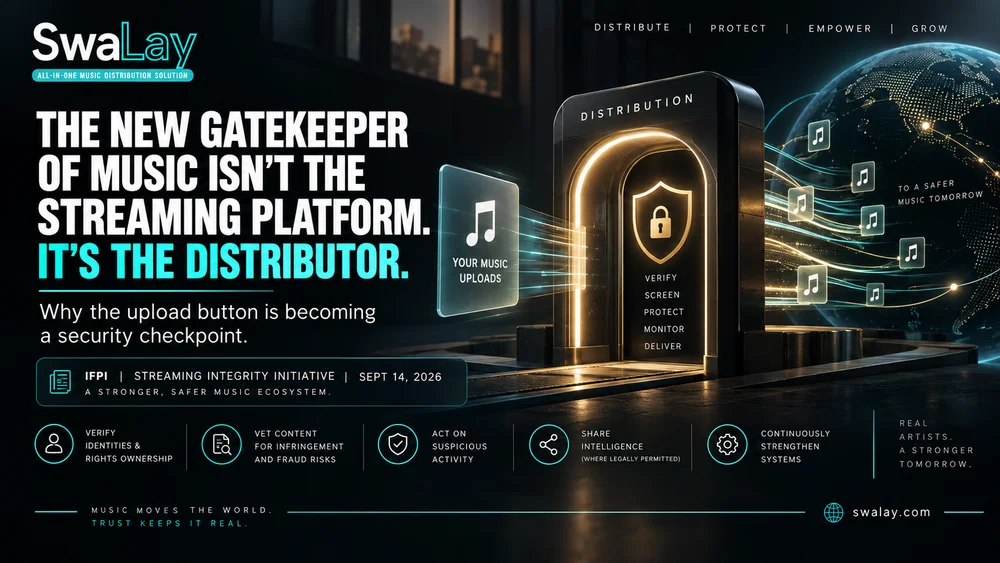
On September 14, the International Federation of the Phonographic Industry (IFPI) launched its Streaming Integrity Initiative, bringing together major labels and independent music distributors around a common set of practices for fighting streaming fraud. The initiative asks distributors to verify customer identities and rights ownership, screen uploads for infringement and fraud, investigate suspicious activity, share relevant intelligence and continuously strengthen their systems.
That sounds technical.
For artists, it could become extremely important.
The Upload Button Is Becoming a Security Checkpoint
The explosion of digital distribution made it possible for almost anyone to release music globally. That accessibility transformed the independent music economy.
But the same open infrastructure can also be exploited.
Streaming fraud can involve manipulated plays, unauthorized uploads, impersonation, mass-generated content and other methods designed to capture attention or royalties that legitimate creators should receive. IFPI says these practices can undermine trust and divert revenue from artists, songwriters and rights holders.
The issue became even more visible this week when Universal Music Group sued DistroKid, alleging copyright infringement and the distribution of large volumes of allegedly fraudulent and unauthorized content. DistroKid has disputed the allegations, and the claims remain to be determined in court.
The timing is striking.
The industry is simultaneously asking distributors to strengthen their safeguards while one of the biggest disputes involving a major distributor has landed in court.
Why This Matters to Independent Artists
The future of distribution may no longer be judged only by one question:
“How many platforms can you deliver my song to?”
A more important question could become:
“How safely can you get my music into the ecosystem?”
That means rights verification, metadata accuracy, fraud detection, identity checks and responsible content review are becoming part of the value of distribution itself.
For independent artists, this matters because their catalog is their business.
A fraudulent stream, unauthorized upload or impersonated release is not simply a technical problem. It can affect discovery, royalties, reputation and the ability of genuine music to compete for attention.
And this is where companies such as SwaLay sit at an increasingly important point in the ecosystem: between creators and the global digital music infrastructure.
The Distribution Business Is Entering Its Trust Era
The next generation of music distributors may compete on more than reach and speed.
They may compete on trust.
Who is releasing the music?
Who owns it?
Is the metadata legitimate?
Are the streams genuine?
Can suspicious activity be detected early?
And can the ecosystem respond before the damage spreads?
That is a much bigger role than simply pressing “deliver.”
The future of music distribution may be less about moving more songs and more about proving which songs deserve to move.
And for independent artists, that could become one of the most important changes in the music business that nobody was talking about until now.