
The New Metadata Behind Every Song
For decades, music metadata has quietly carried the information that helps the industry function: artist names, composers, publishers, labels, genres and release details. Now, something entirely new is entering that system: how AI was used to create the music.
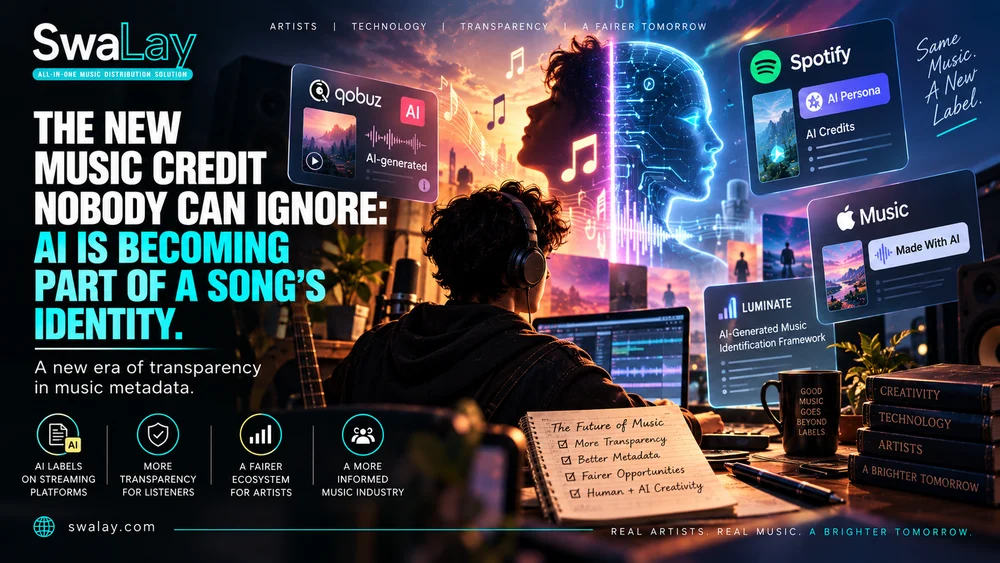
In September 2026, Qobuz introduced a visible tag for music it identifies as AI-generated. The platform also revealed that AI-generated tracks currently account for only 0.38% of its streams, despite the enormous volume of AI music entering catalogues. Qobuz says more than a third of AI-identified albums with no listening activity, representing around four million tracks, have been removed from its search engine.
That creates an interesting reality for artists: AI music may be everywhere in supply, but it is not necessarily everywhere in demand.
And this is where the story gets bigger.
Spotify has introduced AI Persona badges for artist identities, while also providing AI Credits that allow artists to disclose how AI was used during the creation of a track. Apple Music is also preparing "Made With AI" labels, and Luminate has announced a framework for identifying AI-generated music in its industry data.
For independent artists, this means AI disclosure is moving from an optional conversation into the metadata infrastructure of music.
That could affect discovery, trust, recommendations, chart eligibility and eventually how listeners judge a release.
The important question is no longer simply, "Was AI used?"
It is becoming:
How was AI used, who created the music, and what should the listener know?
For artists releasing music today, keeping accurate records of AI tools, creative contributions and rights could become just as important as maintaining artwork, credits and ownership documentation.
The future of music may not divide neatly between humans and AI.
Instead, every release may carry a story of how humans and technology created it together.